






Mesotherapy in the Management of Acute and Chronic Pain
Mesotherapy in the Management of Acute and Chronic Pain
in
So MUK Society of Mesotherapy · United Kingdom Clinical Review Mesotherapy in the


Latest Mesotherapy News & Media CoverageStay up to date with the latest mesotherapy news from SoMUK and the wider aesthetic medicine community. This page brings together press coverage, articles and announcements featuring SoMUK, our members, and the latest developments in the field of mesotherapy.
From industry publications to professional features, our mesotherapy news and media page offers a curated selection of content relevant to practitioners, members, and anyone following developments in mesotherapy and aesthetic medicine. Check back regularly for updates, or visit our Membership page to find out how SoMUK can support your professional development.


Society of Mesotherapy of the United Kingdom SoMUK — Member Article Combining Mesotherapy



Four of the most talked-about injectable treatments in aesthetic medicine today — but how do they actually differ? This guide explains the science, the indications, and when to use each one.
Visit somuk.co.uk →“These four treatments are frequently confused — and the confusion is understandable, because they share common ground. All four are injectable. All four improve skin quality. But they work through entirely different biological mechanisms, at different depths, for different indications. Understanding the distinction is essential for any practitioner recommending these treatments, and for any patient choosing between them.” — Dr Philippe Hamida-Pisal, Medical Advisor, SoMUK — 22 Harley Street, London
Patients and practitioners alike ask this question constantly. “Is a skin booster the same as mesotherapy?” “Are exosomes better than polynucleotides?” “Can I combine them?” The answer to each question depends on understanding not just what each treatment contains, but how and where it works at a cellular level — and what you are actually trying to achieve for this specific patient.
This guide provides a clear, clinically grounded explanation of all four treatments, a direct comparison, and guidance on when to combine them for enhanced outcomes.
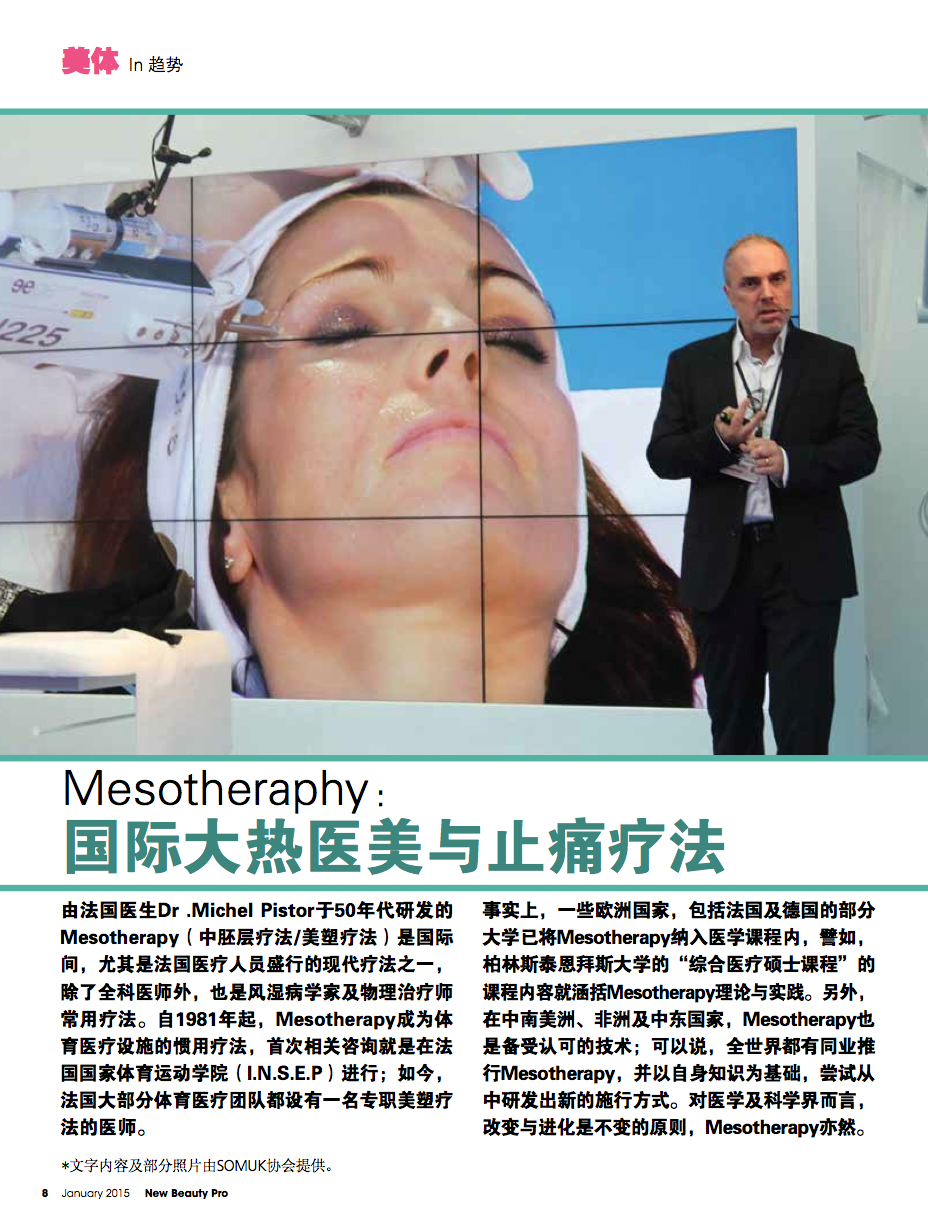
Mesotherapy is the original injectable skin treatment, developed in France by Dr Michel Pistor in 1952. It involves administering a customised cocktail of active ingredients — vitamins, minerals, amino acids, hyaluronic acid, peptides, and other active compounds — via micro-injections into the mesoderm (the middle layer of skin).
Unlike the other three treatments, which use a single primary active agent, mesotherapy is defined by its cocktail approach: the practitioner selects and combines multiple ingredients based on the individual patient’s specific concern. This makes it the most versatile of all four treatments, capable of addressing skin quality, hair restoration, cellulite, and pain management in a single modality.
Skin Boosters are a specific category of injectable treatment using stabilised, non-cross-linked hyaluronic acid (HA) formulated specifically for deep skin hydration. Unlike dermal fillers — which use cross-linked HA to add structural volume — Skin Boosters use a softer, more fluid HA that integrates into the dermis and acts as a water-binding reservoir.
The primary goal is skin quality improvement from within: restoring deep hydration, improving skin elasticity, and creating the luminous “glow from within” effect that is often the first thing patients and observers notice. Results are both immediate (hydration) and cumulative (collagen stimulation develops over weeks).
Exosomes represent the most recent frontier in regenerative aesthetics. They are extracellular vesicles — tiny membrane-bound particles naturally released by cells — that carry biological messages between cells in the form of proteins, lipids, RNA and growth factors. In aesthetic medicine, exosomes derived from stem cells are used to trigger the skin’s own regenerative processes at a molecular level.
Unlike the previous two treatments, which deliver actives directly, exosomes work by signalling to existing cells to change their behaviour: stimulating fibroblasts to produce more collagen, promoting anti-inflammatory responses, and accelerating tissue repair. This makes them particularly powerful in post-procedure recovery protocols and for patients with advanced skin ageing or photoageing.
Polynucleotides (PN) — also known as PDRN (polydeoxyribonucleotide) — are fragments of DNA derived from salmon or trout sperm, purified and processed for clinical use. They work by stimulating tissue repair at a DNA level: binding to adenosine receptors on cells to promote cell proliferation, increase collagen and elastin production, reduce inflammation, and improve blood supply to the treated area.
Their mechanism is distinct from all three other treatments: polynucleotides essentially rebuild the scaffolding of the skin from the ground up by creating the biological conditions for new tissue to form. This makes them the treatment of choice for skin laxity, tissue repair after damage (sun, scarring, ageing), and long-term structural improvement.
Use this table as a quick clinical reference when choosing between treatments or designing a combined protocol.
| Mesotherapy | Skin Boosters | Exosomes | Polynucleotides | |
|---|---|---|---|---|
| What it is | Multi-active vitamin & HA cocktail | Non-cross-linked hyaluronic acid | Cell-derived signalling vesicles | DNA repair molecules (PDRN) |
| How it works | Delivers nutrients & actives into mesoderm | Binds water, hydrates deeply, stimulates collagen | Signals cells to regenerate at molecular level | Stimulates collagen via DNA repair pathways |
| Best for | Versatile: skin, hair, cellulite, pain | Dull, dehydrated, lacklustre skin | Advanced ageing, post-procedure recovery | Laxity, fine lines, structural repair |
| Results visible | After first session | 24–48 hours (immediate glow) | 4–6 weeks | 4–8 weeks |
| Sessions | 3–6 initial | 3 initial | 1–3 | 3–4 initial |
| Downtime | Minimal | Minimal | Minimal | Minimal |
| Combine with | All three + Botox, fillers, laser | Mesotherapy, PN, Exosomes, Botox | Mesotherapy, PN, laser, microneedling | Mesotherapy, Skin Boosters, Exosomes |
| Patient profile | All types — most versatile entry point | Patients wanting immediate visible improvement | Patients with mature or damaged skin | Patients with laxity, texture concerns |
The most significant clinical outcomes are achieved not by choosing one of these treatments, but by combining two or more in a thoughtfully sequenced protocol. Here are the most clinically validated combinations:
All sessions held at 22 Harley Street, London W1 · Max 4 delegates · £600 per delegate · CPD accredited
| Date | Course | Spaces | Book |
|---|---|---|---|
| JUNE 2026 | |||
| Sat 6 June | AestheticAesthetic Mesotherapy | ● 4 left | BOOK |
| Sun 7 June | PainPain Management Mesotherapy | ● 4 left | BOOK |
| Mon 8 June | AestheticSkin BoostersMesotherapy & Skin Boosters | ● 4 left | BOOK |
| Sat 20 June | AestheticExosomesAesthetic Mesotherapy & Exosomes | ● 4 left | BOOK |
| JULY 2026 | |||
| Sat 4 July | AestheticAesthetic Mesotherapy | ● 4 left | BOOK |
| Sun 5 July | ExosomesSkin BoostersExosomes & Skin Boosters | ● 4 left | BOOK |
| Sun 12 July | PainPain Management Mesotherapy | ● 4 left | BOOK |
| AUGUST 2026 | |||
| Sat 22 Aug | AestheticAesthetic Mesotherapy | ● 4 left | BOOK |
| Sun 23 Aug | AestheticExosomesMesotherapy & Exosomes | ● 4 left | BOOK |
| SEPTEMBER 2026 | |||
| Sat 12 Sep | AestheticExosomesAesthetic Mesotherapy & Exosomes | ● 4 left | BOOK |
| Sun 13 Sep | AestheticSkin BoostersSkin Boosters & Mesotherapy | ● 4 left | BOOK |
| OCTOBER 2026 | |||
| Sat 3 Oct | AestheticExosomesAesthetic Mesotherapy & Exosomes | ● 4 left | BOOK |
| Sun 4 Oct | PainPain Management Mesotherapy | ● 4 left | BOOK |
| Sat 17 Oct | AestheticExosomesAesthetic Mesotherapy & Exosomes | ● 4 left | BOOK |
| Sun 18 Oct | AestheticSkin BoostersSkin Boosters & Mesotherapy | ● 4 left | BOOK |
| NOVEMBER 2026 | |||
| Sat 14 Nov | AestheticExosomesAesthetic Mesotherapy & Exosomes | ● 4 left | BOOK |
| Thu 19 Nov | AestheticSkin BoostersAesthetic Mesotherapy & Skin Boosters | ● 4 left | BOOK |
| DECEMBER 2026 | |||
| Sat 5 Dec | AestheticExosomesAesthetic Mesotherapy & Exosomes | ● 4 left | BOOK |
| Sun 6 Dec | PainPain Management Mesotherapy | ● 4 left | BOOK |
View full calendar with filters at somuk.co.uk/training-calendar/
GLP-1 receptor agonists (Ozempic, Wegovy, Mounjaro) have transformed weight management — but they have also created a new aesthetic challenge that is arriving in clinics daily. Every aesthetic practitioner needs to understand what happens to the face after rapid weight loss, and what mesotherapy can do about it.
Visit somuk.co.uk →“I am seeing more patients than ever who come in looking older than they did a year ago — and they cannot understand why. They have lost weight, they feel better, they expected to look better. Instead their face looks hollow, deflated, and aged. GLP-1 medications are extraordinarily effective. But the aesthetic consequences of rapid facial fat loss are real, significant, and require a structured clinical response. Mesotherapy is part of that response.”— Dr Philippe Hamida-Pisal, Medical Advisor, SoMUK
GLP-1 receptor agonists — semaglutide (Ozempic, Wegovy), tirzepatide (Mounjaro), liraglutide (Saxenda) — work by mimicking the glucagon-like peptide-1 hormone to reduce appetite and slow gastric emptying. Their weight loss results can be dramatic: 15–25% total body weight reduction in clinical trials. But rapid, significant weight loss does not discriminate between body fat and facial fat.
“Ozempic face” is the colloquial term for the constellation of aesthetic changes that occur in the face following rapid weight loss on GLP-1 medications. It is not caused by the drug itself — it is caused by rapid fat loss from facial compartments that normally provide volume, structure, and support to the overlying skin.
Mesotherapy cannot restore fat volume — that requires dermal fillers or biostimulators. But it plays a critical and often underappreciated role in addressing the skin quality and structural changes that accompany facial fat loss. In the context of Ozempic face, mesotherapy addresses three specific mechanisms:
| Mechanism | How mesotherapy helps |
|---|---|
| Skin quality restoration | Vitamin and amino acid-rich cocktails restore the nutritional environment of the dermis — reversing the skin thinning, dehydration, and crepiness associated with rapid weight loss. Hyaluronic acid components restore deep dermal hydration. |
| Collagen stimulation | Growth factor delivery, vitamin C, and peptide cocktails stimulate fibroblast activity and collagen synthesis — improving skin thickness and elasticity that was lost during rapid weight loss. |
| Tissue preparation for other treatments | Mesotherapy applied 2–3 weeks before filler or biostimulator treatment primes the tissue, improves integration, and enhances the longevity of subsequent volumising treatments. |
| Reducing skin laxity progression | Polynucleotides combined with mesotherapy stimulate structural tissue repair, reducing the rate at which skin laxity progresses in the months following rapid weight loss. |
| Supporting nutritional deficiencies | Patients on GLP-1 medications often eat significantly less and may have nutritional deficiencies (B vitamins, zinc, amino acids) that directly impact skin health. Intradermal delivery bypasses the reduced dietary intake. |
| Stage | Protocol |
|---|---|
| During active weight loss | Mesotherapy first: begin nutritional and hydration mesotherapy cocktails from the start of significant weight loss. Monthly sessions. Focus on vitamin B complex, amino acids, HA, growth factors. Do NOT volumise during active weight loss — the face is still changing and filler placed now may look wrong in 3 months. |
| Weight stabilisation (3+ months stable) | Assessment and plan: once weight is stable for at least 3 months, assess residual volume loss, laxity, and skin quality. Begin combined protocol: mesotherapy for skin quality + biostimulator (Sculptra, Radiesse) or polynucleotides for structural support. |
| Volume restoration phase | Fillers and biostimulators: 2–3 weeks after mesotherapy priming, introduce targeted filler for specific volume deficits (malar, temple, jawline). Biostimulators for diffuse volume and structural support. Continue mesotherapy in alternating sessions. |
| Maintenance | Ongoing mesotherapy every 6–8 weeks to sustain skin quality. Reassess volume every 6–12 months. Many GLP-1 patients remain on medication long-term — skin quality maintenance is ongoing. |
22 Harley Street, London · Max 4 delegates · £600 per delegate · CPD accredited
| Date | Course | Spaces | Book |
|---|---|---|---|
| Sat 4 Jul | AestheticAesthetic Mesotherapy | 4 left | BOOK |
| Sun 5 Jul | ExosomesSkin BoostersExosomes & Skin Boosters | 4 left | BOOK |
| Sun 12 Jul | PainPain Management | 4 left | BOOK |
| Sat 22 Aug | AestheticAesthetic Mesotherapy | 4 left | BOOK |
| Sun 23 Aug | AestheticExosomesMesotherapy & Exosomes | 4 left | BOOK |
View all 22 dates at somuk.co.uk/training-calendar/
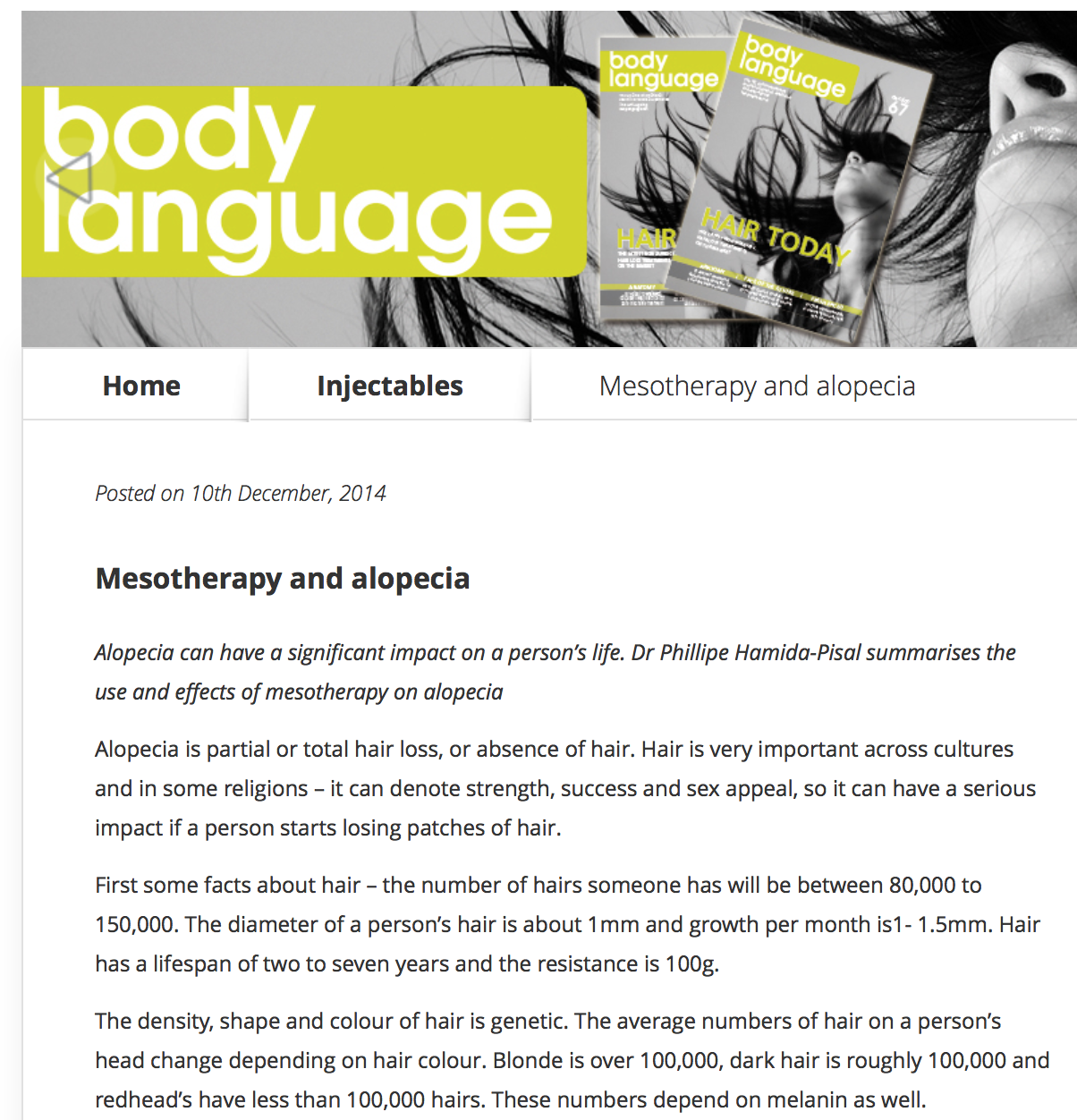
Hair loss affects one in three women and two in three men by age 50. Mesotherapy is now one of the most evidence-backed minimally invasive interventions available — but protocol matters enormously. Here is what the current science tells us.
Visit somuk.co.uk →“Summer is the season when patients notice hair thinning most — the contrast of sunlight, the comparison to others, the anxiety before a holiday. It is also when demand for hair restoration consultations peaks. Every practitioner seeing aesthetic patients should understand what mesotherapy can and cannot do for hair loss — and when to refer.”— Dr Philippe Hamida-Pisal, Medical Advisor, SoMUK
The scalp presents a unique biological challenge for hair restoration: it is a highly vascularised area with a dense network of hair follicles, sebaceous glands, and supporting structures — but it is also covered by a relatively impermeable surface that limits topical delivery. This is precisely why injectable mesotherapy outperforms topical treatments for many patients: it bypasses the surface entirely and delivers actives directly to the follicular microenvironment where they are needed.
The hair follicle cycle — anagen (growth), catagen (transition), telogen (rest) — is regulated by a complex interplay of growth factors, hormones, and nutritional signals. Mesotherapy works by creating a favourable environment for follicle function: improving microcirculation, delivering essential nutrients, reducing DHT activity, and stimulating growth factor production at the follicular level.
Not all hair loss is the same — and mesotherapy is not appropriate for all types. Patient selection and accurate diagnosis are the foundation of successful outcomes.
The active ingredients used in hair mesotherapy cocktails are chosen based on the specific aetiology and the biological mechanisms involved. The following ingredients have the strongest current evidence base:
| Ingredient | Mechanism in hair follicle |
|---|---|
| Minoxidil (intradermal) | Potassium channel opener — prolongs anagen phase, increases follicle size, improves dermal papilla vascularity. Highly effective for androgenetic alopecia at lower concentrations than topical due to direct delivery. |
| Dutasteride / Finasteride | 5-alpha reductase inhibitor — reduces DHT conversion at follicle level. Intradermal delivery reduces systemic side effects vs. oral. Strong evidence for androgenetic alopecia. |
| Biotin (Vitamin B7) | Essential cofactor for keratin biosynthesis. Deficiency directly causes hair loss. Intradermal delivery bypasses variable oral absorption. |
| Zinc | 5-alpha reductase inhibitor + essential for DNA synthesis in rapidly dividing follicle cells. Deficiency strongly linked to hair loss. |
| Vitamin C (ascorbic acid) | Antioxidant + collagen synthesis cofactor. Supports dermal papilla structure and follicular microenvironment. Also reduces scalp inflammation. |
| Amino acids (lysine, cysteine) | Building blocks of keratin — the primary structural protein of hair. Cysteine forms the disulfide bonds that give hair its strength and structure. |
| VEGF (Vascular Endothelial Growth Factor) | Promotes angiogenesis around the follicle — increased blood supply means improved nutrient delivery. Key mechanism in androgenetic alopecia response to mesotherapy. |
| Polynucleotides (PDRN) | Stimulates tissue repair, fibroblast proliferation, and growth factor production. Emerging strong evidence for hair restoration when combined with classic cocktails. |
| Parameter | Recommendation |
|---|---|
| Initial assessment | Full blood screen (ferritin, thyroid panel, B12, vitamin D, androgens, full blood count) before any treatment. Trichoscopy assessment of follicle density and miniaturisation. Photograph baseline. |
| Session frequency | Every 2–4 weeks for initial 4–6 sessions, then monthly maintenance. More frequent sessions (weekly) in first month for telogen effluvium. |
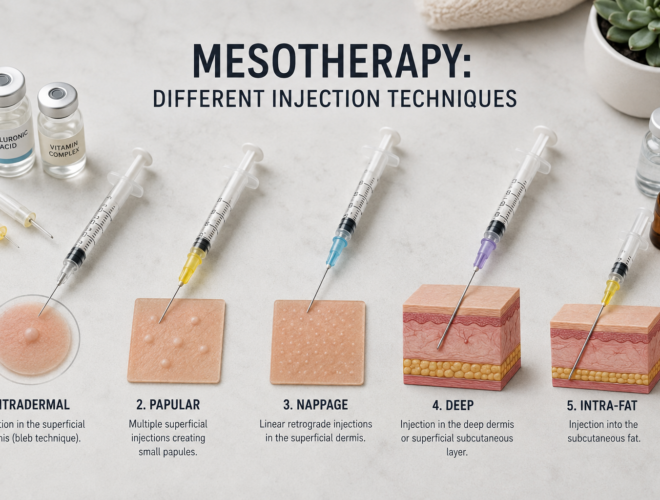
| Injection technique | Nappage technique — multiple superficial injections across the scalp at 1–2cm intervals. Depth: 2–4mm into the dermis, above the follicle level. Avoid too deep (risks damaging follicles). |
| Volume per session | 0.02–0.05ml per injection point. Total volume 2–5ml per session depending on area treated. |
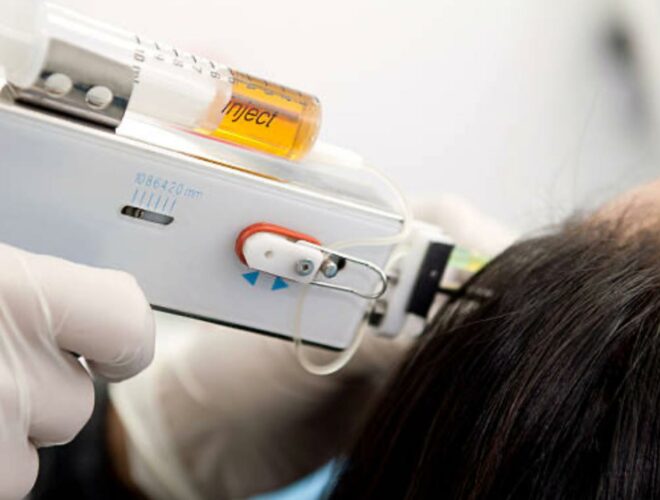
| Needles | 30–32G, 4mm needle. Mesotherapy gun can improve speed and consistency in experienced hands. |
| Results timeline | Reduced shedding: 4–6 weeks. Visible regrowth: 3–4 months. Full assessment at 6 months. |
| Maintenance | Every 2–3 months after initial course to sustain results. Without maintenance, benefit diminishes over 6–12 months. |
| Combination | Most effective combined with: PRP, low-level laser therapy (LLLT), and topical/oral medical management where indicated. |
22 Harley Street, London · Max 4 delegates · £600 per delegate · CPD accredited
| Date | Course | Spaces | Book |
|---|---|---|---|
| Sat 6 Jun | AestheticAesthetic Mesotherapy | 4 left | BOOK |
| Sun 7 Jun | PainPain Management | 4 left | BOOK |
| Mon 8 Jun | AestheticSkin BoostersMesotherapy & Skin Boosters | 4 left | BOOK |
| Sat 20 Jun | AestheticExosomesAesthetic Mesotherapy & Exosomes | 4 left | BOOK |
| Sat 4 Jul | AestheticAesthetic Mesotherapy | 4 left | BOOK |
| Sun 5 Jul | ExosomesSkin BoostersExosomes & Skin Boosters | 4 left | BOOK |
View all 22 dates at somuk.co.uk/training-calendar/
Male aesthetic patients now represent 25–30% of clinic bookings in leading UK aesthetic practices — up from under 10% a decade ago. Mesotherapy is one of the treatments driving this growth. Here is why, and how to adapt your practice and communication for male patients.
Visit somuk.co.uk →“October is when male patients come in. They have been on holiday, they have seen photographs, they have had comments from partners. They want to look fresher, sharper, less tired. They do not want to look like they have had anything done. Mesotherapy is ideal for this patient — it delivers visible results with no tell-tale signs of treatment. That is exactly what the male patient wants.”— Dr Philippe Hamida-Pisal, Medical Advisor, SoMUK
30% of UK aesthetic clinic bookings are now male patients (2026) |
3x growth in male aesthetic treatment enquiries in the last 5 years |
68% of men say they would consider an aesthetic treatment if it required no downtime |
The growth of male aesthetic patients is being driven by several converging forces: the normalisation of skincare and grooming among men, the influence of social media and video calls, increased awareness of aesthetic treatments through media coverage, and the development of treatments that deliver results without the visible “done” look that many men fear.
Mesotherapy is particularly well-positioned for male patients because its results are natural and gradual, there is no significant downtime, the treatments are quick, and they address the specific concerns male patients most commonly present with: skin quality, hair loss, fatigue, and skin firmness.
Male skin has specific physiological differences that require protocol adaptation. Using a standard aesthetic mesotherapy cocktail designed for female patients will underperform for male patients.
| Parameter | Male-specific adaptation |
|---|---|
| Skin thickness | Male skin is 20–25% thicker than female skin. Injection depth should be increased slightly — 3–4mm rather than 2–3mm — to ensure actives reach the target layer. Nappage technique requires more pressure. |
| Cocktail formulation | Higher concentration of vitamins (particularly vitamin C and B complex) and amino acids to support the higher collagen turnover rate in male skin. Reduce HA concentration slightly — male patients are more sensitive to visible swelling. Add zinc and selenium for enhanced antioxidant support and sebum regulation. |
| Treatment frequency | Male patients typically prefer monthly rather than fortnightly sessions — it fits better with work schedules and reduces the perception of “needing a lot of treatment.” Monthly sessions are clinically effective for most male presentations. |
| Treatment area priority | Periorbital region and under-eye area first — this addresses the “tired look” concern most directly and produces the most immediately noticeable result. Follow with forehead, mid-face, and jaw as appropriate to the individual presentation. |
| Session length | Keep sessions to 30–40 minutes maximum. Male patients have lower tolerance for lengthy appointments and are more likely to cancel or not rebook if sessions run long. Efficiency is valued. |
| Pain management | Many male patients decline topical anaesthetic. Offer it but do not insist. A confident, quick injection technique is more appreciated than a lengthy pre-treatment anaesthetic protocol. |
| Results communication | Male patients want to know: how long will it take, how long will it last, and will anyone notice. Answer all three at the consultation. Do not use language about “glowing” or “luminous” skin — use “sharper,” “fresher,” “more defined,” “less tired.” |
The way you describe mesotherapy to a male patient determines whether they book or leave. Male patients respond to different language, different framing, and different reassurances than female patients.
22 Harley Street, London · Max 4 delegates · £600 per delegate · CPD accredited
| Date | Course | Spaces | Book |
|---|---|---|---|
| Sat 3 Oct | AestheticExosomesAesthetic Mesotherapy & Exosomes | 4 left | BOOK |
| Sun 4 Oct | PainPain Management | 4 left | BOOK |
| Sat 17 Oct | AestheticExosomesAesthetic Mesotherapy & Exosomes | 4 left | BOOK |
| Sun 18 Oct | AestheticSkin BoostersSkin Boosters & Mesotherapy | 4 left | BOOK |
| Sat 14 Nov | AestheticExosomesAesthetic Mesotherapy & Exosomes | 4 left | BOOK |
| Thu 19 Nov | AestheticSkin BoostersAesthetic Mesotherapy & Skin Boosters | 4 left | BOOK |
View all 22 dates at somuk.co.uk/training-calendar/
Corticosteroid injections have been the default treatment for musculoskeletal pain for decades. But the evidence in 2025 is raising serious questions about their long-term safety — while the evidence for pain mesotherapy continues to strengthen. Here is the clinical picture every pain practitioner needs to know.
Visit somuk.co.uk →“The conversation around corticosteroid injections has changed significantly in the last two years. The short-term pain relief is real — nobody disputes that. But the accumulating evidence on cartilage damage, tendon weakening, and joint deterioration is now impossible to ignore. Pain mesotherapy does not offer the same speed of relief. But it does not damage the structures it is trying to protect. That distinction matters enormously over a patient’s lifetime.”— Dr Philippe Hamida-Pisal, Medical Advisor, SoMUK — 22 Harley Street, London
In May 2025, a major study published in Radiology — one of the most respected clinical journals in the field — analysed data from the Osteoarthritis Initiative and produced findings that are reshaping how the medical community thinks about corticosteroid injections for musculoskeletal pain.
This is not an isolated finding. It confirms and extends a growing body of evidence that has been building for several years. Corticosteroid injections are effective at reducing inflammation and pain in the short term — typically 4–8 weeks — but may accelerate the very joint deterioration they are being used to manage.
4–8 weeks: typical duration of corticosteroid pain relief |
2yr period over which significantly greater cartilage degradation was observed in corticosteroid group (Radiology 2025) |
3–6 months: demonstrated pain relief duration with pain mesotherapy protocols (multiple RCTs) |
This is not a simple case of one treatment being universally superior. The evidence shows a nuanced picture that requires clinical judgement and patient-specific decision-making.
| Corticosteroid Injection | Pain Mesotherapy | |
|---|---|---|
| Speed of pain relief | Fast — 24–72 hours | Slower — 1–3 weeks for full effect |
| Duration of relief | Short — 4–8 weeks typically | Longer — 3–6 months with full course |
| Effect on cartilage | Catabolic risk — cartilage thinning with repeated use confirmed in 2025 Radiology study | No catabolic effect — does not damage joint structures |
| Effect on tendons | Risk of weakening and rupture with repeated injection, particularly rotator cuff | No tendon risk — intradermal delivery does not reach tendon level |
| Systemic side effects | Significant — blood sugar elevation, immune suppression, HPA axis effects with repeated use | Minimal — local effect only at therapeutic doses |
| Suitability for diabetics | Caution required — significant blood sugar elevation possible | Generally suitable — no glycaemic impact at clinical doses |
| Frequency limit | Maximum 3–4 per year per joint due to cumulative cartilage risk | No frequency limit — can be repeated as clinically indicated |
| Function scores (OA) | Significant short-term improvement; no advantage at 6 months vs placebo in some trials | Superior WOMAC and Oxford Knee Scale vs oral NSAIDs at 4 and 8 weeks (Farpour et al.) |
| Pre-surgical risk | Increased infection risk if given <3 months before joint replacement surgery | No known pre-surgical contraindication |
| Patient selection | Broad — but caution in diabetics, immunocompromised, and patients near surgery | Broader — suitable for many patients excluded from corticosteroid use |
This is not an either/or decision in every case. The evidence suggests a sequenced approach that plays to the strengths of each modality.
| Clinical situation | Recommended approach |
|---|---|
| Acute severe inflammatory pain requiring rapid relief | Corticosteroid injection may be appropriate as a bridge to longer-term management. Do not rely on it as the only intervention. Follow with mesotherapy once acute phase settles. |
| Chronic low back pain | Pain mesotherapy first line. RCT evidence (Costantino et al.) shows equivalent outcomes to systemic corticosteroid at 6 months without the systemic side effect burden. |
| Knee osteoarthritis (Grade 2–3) | Mesotherapy shows superior functional outcomes at 4–8 weeks vs oral NSAIDs. Avoid repeated corticosteroid injections given 2025 Radiology data on cartilage degradation. Consider combined mesotherapy + HA injection protocol. |
| Tendonitis and soft tissue pain | Mesotherapy preferred where tendon integrity is a concern. Corticosteroid injection near tendons carries rupture risk with repeat use. Mesotherapy for chronic tendonitis with repeated sessions shows sustained improvement. |
| Trigger point pain and myofascial syndrome | Mesotherapy with local anaesthetic (lidocaine) significantly outperforms dry needling. Multiple fluid types including NSAID solutions, vitamins, and local anaesthetics via mesotherapy are effective. Corticosteroid not the first choice. |
| Chronic neck pain | Mesotherapy shows VAS reduction of 2.26 points vs 0.79 for dry control (Paolucci et al.). Corticosteroid use in cervical spine requires specialist guidance. Mesotherapy is the appropriate non-specialist pain intervention. |
| Diabetic patients with musculoskeletal pain | Mesotherapy strongly preferred. Corticosteroid injections cause significant blood sugar elevation that may last 3–14 days and require medication adjustment. Mesotherapy carries no glycaemic risk at clinical doses. |
| Patients approaching joint replacement surgery | Avoid corticosteroid within 3 months of planned surgery due to infection risk. Mesotherapy for pain management in the pre-operative period is appropriate and does not carry the same post-operative risk. |
| Patients who have already had multiple corticosteroid injections | Transition to mesotherapy. Given the cumulative evidence on cartilage damage with repeated corticosteroid use, patients who have received 3+ injections in the same joint should be offered mesotherapy as the ongoing management approach. |
22 Harley Street, London · Max 4 delegates · £600 per delegate · CPD accredited
| Date | Course | Spaces | Book |
|---|---|---|---|
| Sun 7 Jun | PainPain Management Mesotherapy | 4 left | BOOK |
| Sun 12 Jul | PainPain Management Mesotherapy | 4 left | BOOK |
| Sun 4 Oct | PainPain Management Mesotherapy | 4 left | BOOK |
| Sun 6 Dec | PainPain Management Mesotherapy | 4 left | BOOK |
| Sat 6 Jun | AestheticAesthetic Mesotherapy | 4 left | BOOK |
| Sat 4 Jul | AestheticAesthetic Mesotherapy | 4 left | BOOK |
View all 22 training dates at somuk.co.uk/training-calendar/