
Mesotherapy for Fine Lines and Skin Quality Around the Eyes
SoMUK · Aesthetic Mesotherapy · November 2026
Mesotherapy for Fine Lines and Skin Quality Around the Eyes
The skin surrounding the eyes is among the thinnest and most delicate areas of the face. As we age, changes in collagen, elastin, hydration and skin elasticity can contribute to fine lines, crepey skin and a tired appearance.
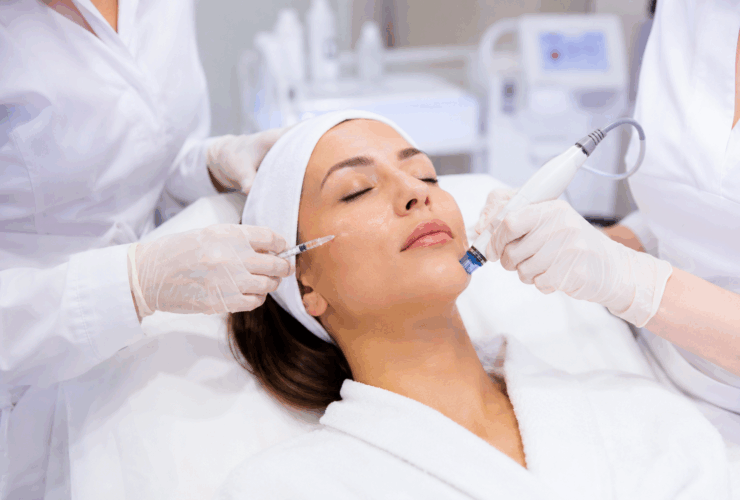
Mesotherapy is used in aesthetic medicine to deliver selected substances into the superficial layers of the skin through multiple small injections. Depending on the formulation, these may include hyaluronic acid, vitamins, amino acids and other ingredients intended to support skin hydration and quality.
Potential benefits of mesotherapy
Mesotherapy may be considered for patients experiencing early signs of ageing around the eyes, particularly where the main concern is skin quality rather than significant volume loss or structural changes.
Fine lines
Certain formulations may help improve hydration and temporarily reduce the appearance of superficial lines.
Crepey skin
Improvements in hydration and skin texture may make the skin appear smoother.
Skin hydration
Hyaluronic acid-based formulations may improve moisture retention and skin suppleness.
Overall skin quality
Some patients may experience improvements in skin appearance following a course of treatment.
However, these benefits depend on the product used, the patient’s skin condition and the treatment protocol.
What does the clinical evidence show?
Although mesotherapy is widely used in aesthetic practice [1], the evidence supporting its effectiveness for periorbital rejuvenation remains limited.
Some clinical studies have reported improvements in skin hydration, elasticity and fine wrinkles following treatment with selected intradermal formulations [2]. However, the available evidence varies considerably between products and treatment protocols, and findings from general facial rejuvenation studies cannot necessarily be applied to the delicate periorbital area.
The importance of patient assessment
Before considering mesotherapy around the eyes, practitioners should identify the underlying cause of the patient’s concerns.
Fine lines caused primarily by dehydration may respond differently from wrinkles associated with repetitive facial movement, significant skin laxity or age-related structural changes.
Mesotherapy is not a substitute for treatments designed to address pronounced skin laxity, significant volume loss or protruding under-eye fat pads.
Safety considerations
The periorbital region requires particular care because of its delicate anatomy and proximity to important vascular structures and the eye itself.
The risk profile depends on the product, the injection depth, the anatomical location and the technique used. The same formulation may carry different risks when injected into the thin periorbital skin than elsewhere on the face.
Products suitable for the periorbital area
Not every mesotherapy product is intended for use around the eyes. Some formulations are specifically indicated by their manufacturer for the periorbital region; others, such as body or lipolytic formulations, or products whose instructions exclude this area, should not be injected there.
Practitioners should only use products whose labelling and instructions for use cover the intended anatomical area and indication, following applicable regulatory requirements and manufacturer instructions [3][4].
A thorough understanding of facial anatomy, appropriate patient selection and complication management is essential.
The role of professional training
At the Society of Mesotherapy UK (SoMUK), we recognise the importance of education, clinical judgement and safe treatment practices.
Practitioners considering mesotherapy for the delicate eye area should have appropriate professional qualifications and specific training in facial anatomy, product selection, injection techniques, contraindications and complication management.
Completing a course does not on its own establish clinical competence or authorisation to practise. Practitioners remain responsible for working within their lawful scope of practice, their professional regulator’s requirements and their insurance cover, and for developing competence through supervised experience.
Mesotherapy should be regarded as one possible approach to improving superficial skin quality, rather than a universal solution for periorbital ageing.
Develop your aesthetic mesotherapy skills
Learn patient assessment, product selection, injection techniques and complication management with SoMUK at 22 Harley Street, London.
Aesthetic Mesotherapy Training View Training Dates Enquire on WhatsApp
Related articles
References and further guidance
- Konda D, Thappa DM. Mesotherapy: What is new? Indian Journal of Dermatology, Venereology and Leprology. 2013;79(1):127–134. ijdvl.com
- Prikhnenko S. Polycomponent mesotherapy formulations for the treatment of skin aging and improvement of skin quality. Clinical, Cosmetic and Investigational Dermatology. 2015;8:151–157. doaj.org
- Medicines and Healthcare products Regulatory Agency (MHRA). Borderline products: how to tell if your product is a medicine. gov.uk
- Society of Mesotherapy UK (SoMUK). Mesotherapy Product Safety and CE Marking. somuk.co.uk
Professional disclaimer. This article is intended for professional education. Treatment suitability, product selection and clinical outcomes vary. The discussion does not establish the effectiveness or regulatory approval of any particular mesotherapy product for use around the eyes.
Society of Mesotherapy UK (SoMUK) · Suite 8a, 22 Harley Street, London W1G 9PL · Telephone / WhatsApp: +44 (0)7798 900 511 · contact@somuk.co.uk · www.somuk.co.uk