
Mesotherapy Training in the UK: Who Can Train and What a Good Course Includes
SoMUK · Training & Education · November 2026
Mesotherapy Training in the UK: Who Can Train and What a Good Course Includes
Mesotherapy is used in aesthetic practice for skin quality, hydration, hair and body treatments. It is also used in some medical settings for pain management. However, mesotherapy training varies considerably: some courses provide only online theory, while others include clinical assessment, product knowledge, complication management and supervised practical experience.
For practitioners considering mesotherapy training in the UK, choosing an appropriate course is essential for patient safety and responsible professional practice.
This guide explains who can undertake mesotherapy training, what a comprehensive course should include, and how to identify a suitable training provider.
What is mesotherapy?
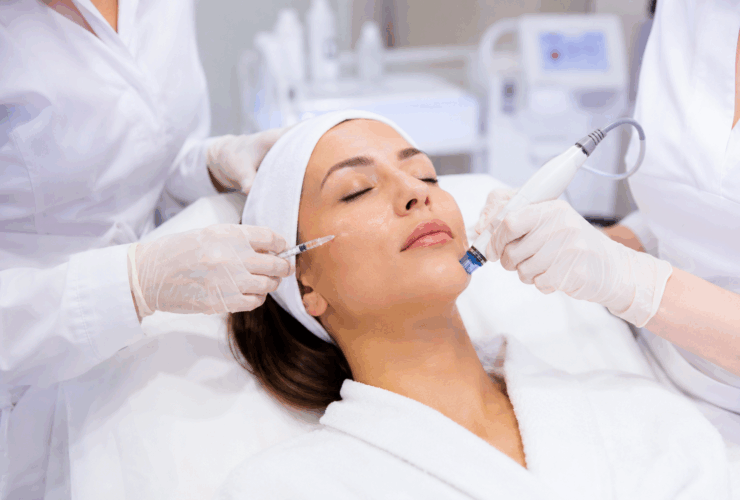
Mesotherapy is a technique involving multiple small injections into superficial skin tissues. Originally developed in France by Dr Michel Pistor in 1952, it has since been adopted in aesthetic and medical practice.
Depending on the indication, mesotherapy may involve different products, including hyaluronic acid preparations and other substances. Common areas of interest include:
- Skin rejuvenation: hydration, skin texture, radiance and fine lines.
- Hair and scalp treatments: selected approaches to thinning hair and hair loss.
- Body treatments: concerns such as skin texture and cellulite.
- Pain management: selected musculoskeletal conditions under appropriate medical supervision.
Further reading: What Is Mesotherapy? For medical applications, see Mesotherapy in the Management of Acute and Chronic Pain.
1. Who can train in mesotherapy in the UK?
Registered healthcare professionals
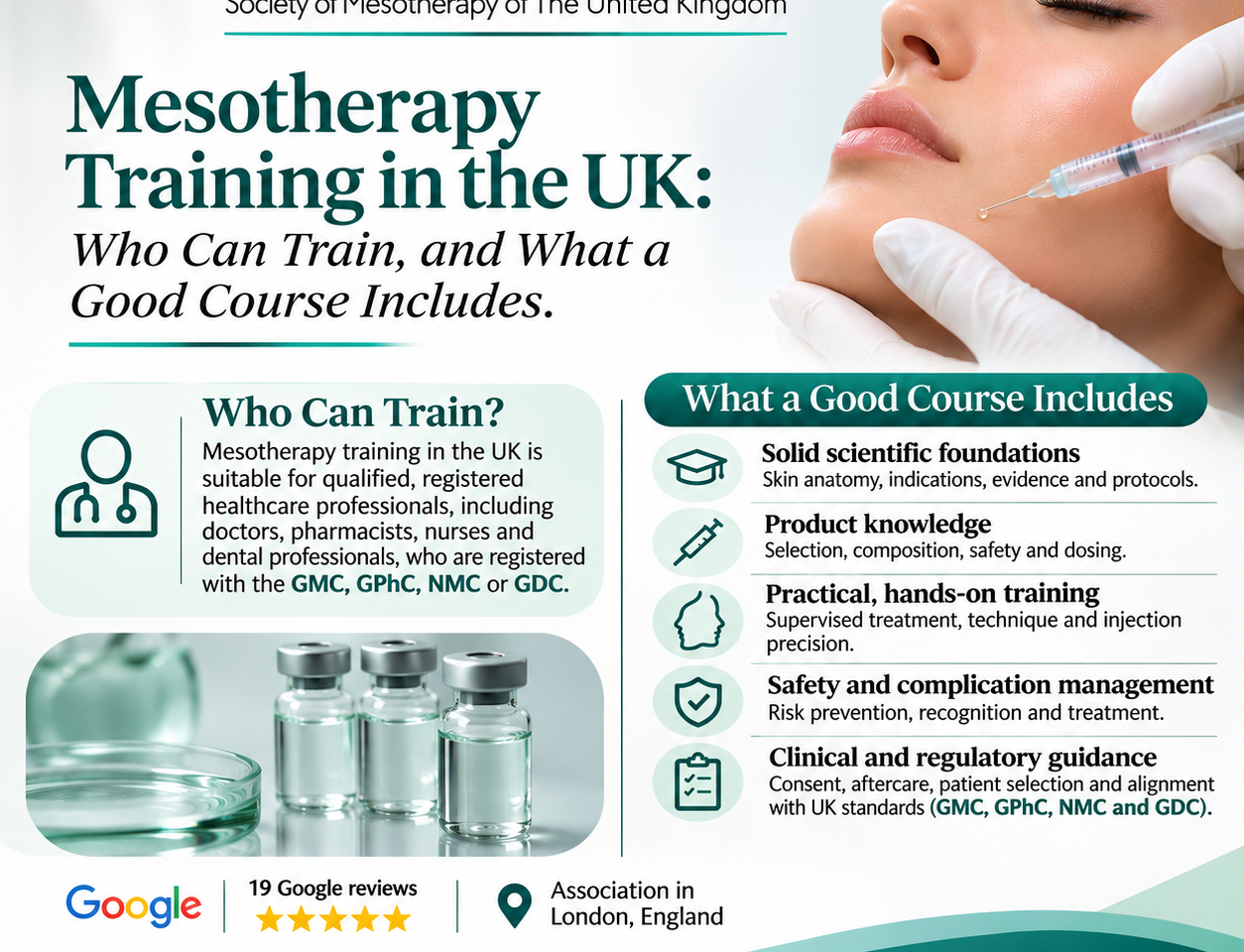
Mesotherapy training is particularly relevant to healthcare professionals with suitable clinical qualifications and experience. These may include:
| Profession | Regulator |
|---|---|
| Doctors | General Medical Council (GMC) |
| Dentists | General Dental Council (GDC) |
| Nurses | Nursing and Midwifery Council (NMC) |
| Pharmacists | General Pharmaceutical Council (GPhC) |
Professional registration provides an important foundation, but it does not automatically establish competence to perform mesotherapy. Practitioners must work within their professional scope, have appropriate training and insurance, and comply with applicable medicines and treatment regulations.
Nurses and other healthcare professionals who are not independent prescribers
A practitioner does not necessarily need to be an independent prescriber to undertake all forms of mesotherapy training. However, the products used and the circumstances in which they may lawfully be supplied and administered are important.
Where prescription-only medicines are involved, practitioners must comply with the relevant prescribing, supply and administration requirements. A prescription or other lawful authorisation may be necessary, depending on the medicine and treatment arrangement.
Completing a mesotherapy course does not provide prescribing rights.
Advanced aesthetic practitioners and beauty therapists
Some mesotherapy courses may accept experienced non-medical aesthetic practitioners. However, eligibility for training must be distinguished from eligibility to carry out a particular treatment. Before enrolling, practitioners should establish:
- whether their qualifications meet the course requirements;
- which techniques and products the course covers;
- whether the proposed treatments are lawful within their practice;
- whether suitable professional indemnity insurance is available;
- whether local authority registration or licensing requirements apply;
- whether further qualifications or clinical supervision are necessary.
SoMUK recommends confirming eligibility with the training provider before booking.
What about UK regulation?
The regulation of non-surgical cosmetic procedures in England is developing. In August 2025, the Department of Health and Social Care published its response to the consultation on licensing non-surgical cosmetic procedures.
The government confirmed plans for additional oversight, including local authority licensing for certain procedures and stronger restrictions on the highest-risk treatments.
Mesotherapy was included in the proposed lower-risk category, although the consultation also identified concerns about differences between injectable and non-injectable techniques. The detailed requirements and implementation timetable must be checked against the latest legislation and official guidance.
Reference: Department of Health and Social Care: Licensing of Non-Surgical Cosmetic Procedures
2. What should a good mesotherapy course include?
A. Scientific foundations and clinical evidence
A good course should explain the history of mesotherapy, relevant skin anatomy, proposed mechanisms of action and current clinical evidence. Practitioners should understand where evidence is limited and how to communicate realistic expectations to patients.
B. Patient assessment and consent
Training should cover medical history, contraindications, patient selection, informed consent and appropriate documentation. Practitioners must recognise when treatment is unsuitable or when further medical assessment is required.
C. Product knowledge and regulation
Mesotherapy products vary in composition, intended use and regulatory classification. Training should cover:
- product ingredients and intended indications;
- manufacturer instructions and authorised use;
- appropriate sourcing and product traceability;
- batch numbers, expiry dates and storage;
- the distinction between medicines, medical devices and other products;
- applicable CE or UKCA requirements where relevant.
Not every injectable product described as a mesotherapy product is legally classified as a medical device. The Medicines and Healthcare products Regulatory Agency (MHRA) determines whether a product falls within the relevant medicines or medical device framework.
Further reading: Mesotherapy Product Safety: CE Marking and Traceability
D. Injection techniques
A comprehensive practical course should explain relevant mesotherapy techniques, including:
- nappage;
- papule technique;
- point-by-point technique;
- mesotherapy injection devices, where appropriate.
Training should address anatomical considerations, technique selection, infection prevention and the limitations of each method.
Further reading: Mesotherapy Injection Techniques
E. Complication prevention and management
Mesotherapy involves breaking the skin and can cause adverse reactions. Practitioners must understand how to recognise and respond to complications, including:
- bruising and swelling;
- infection;
- allergic reactions;
- persistent inflammation;
- nodules and other local tissue reactions;
- product-related adverse events.
Training should include appropriate emergency arrangements, documentation, referral and follow-up.
F. Supervised practical experience
Hands-on training is an important part of developing clinical skills. Practical sessions should provide opportunities to observe treatment, assess suitable patients and practise under appropriate supervision.
Small groups can support individual feedback and closer assessment of each delegate’s understanding. However, attendance at a practical session does not automatically establish competence to practise independently.
G. Assessment and certification
Before booking, practitioners should establish whether the course provides:
- a certificate of attendance;
- CPD-certified education;
- a formal practical assessment;
- a qualification recognised by a particular awarding organisation.
3. Warning signs when choosing mesotherapy training
Be cautious if a course
- accepts practitioners without checking relevant qualifications or experience;
- offers only online demonstrations for a practical injection technique;
- provides little or no supervised clinical experience;
- does not teach contraindications, consent or complications;
- uses products without clear identification or traceability;
- promises that a certificate automatically qualifies every delegate to perform all mesotherapy treatments;
- does not explain whether the course is CPD certified or simply provides an attendance certificate.
A reputable training provider should explain the course requirements, learning outcomes and limitations before accepting a booking.
4. Mesotherapy training with SoMUK
The Society of Mesotherapy of the United Kingdom (SoMUK) supports professional education and responsible mesotherapy practice. SoMUK’s mesotherapy training is delivered by PHP Training Academy, its training provider, at 22 Harley Street, London. Courses combine theoretical education with practical learning in small groups.
Aesthetic Mesotherapy Masterclass
- Duration: one full day, 09:00 to 17:00
- Topics: aesthetic mesotherapy for the skin, hair and body
- Practical training: supervised hands-on experience
- Group size: maximum four delegates
- Certification: CPD certified
Pain Mesotherapy Masterclass
- Duration: one full day, 09:00 to 17:00
- Topics: mesotherapy applications in selected musculoskeletal and pain-management settings
- Practical training: supervised practical education
- Group size: maximum four delegates
- Certification: certificate of attendance
Pain mesotherapy involves additional clinical considerations, including diagnosis, prescribing and the use of medicines. Practitioners must have the appropriate medical competence and authority for the treatments they intend to provide.
Training fees
| Course | Standard fee | SoMUK member fee |
|---|---|---|
| Aesthetic Mesotherapy Masterclass | £600 | £480 |
| Pain Mesotherapy Masterclass | £600 | Confirm eligibility for discount |
SoMUK members receive 20% off eligible CPD training. The SoMUK training calendar publishes forthcoming dates and course information: View the Mesotherapy Training Calendar.
5. Why practical training matters
Mesotherapy is not simply about learning an injection technique. Good training helps practitioners understand how to assess patients, select suitable treatments, recognise risks and make responsible clinical decisions.
Practical supervision allows delegates to receive feedback on their technique and develop confidence within an appropriate educational setting. However, competence develops through suitable education, assessment, experience and continuing professional development.
The aim of training should always be safe, evidence-informed patient care.
Book your mesotherapy training
Interested in developing your mesotherapy knowledge and practical skills? Contact SoMUK to discuss your professional background, course eligibility and available training dates.
View Training Dates Enquire on WhatsApp Become a SoMUK Member
Related articles
Mesotherapy Injection TechniquesNappage, papules, point-by-point methods and injection devices.
Mesotherapy Product Safety and CE MarkingClassification, sourcing, traceability and safety.
Mesotherapy for Pain ManagementAn introduction to medical mesotherapy in pain management.
Combining Mesotherapy With Other Aesthetic TreatmentsClinical considerations when combining treatments.
References and further guidance
- Department of Health and Social Care (2025). The Licensing of Non-Surgical Cosmetic Procedures in England: Consultation Response. gov.uk
- Medicines and Healthcare products Regulatory Agency (MHRA). Borderline products: how to tell if your product is a medical device. gov.uk
- Medicines and Healthcare products Regulatory Agency (MHRA). Borderline products: how to tell if your product is a medicine. gov.uk
- Society of Mesotherapy of the United Kingdom (SoMUK). What Is Mesotherapy? somuk.co.uk
- Society of Mesotherapy of the United Kingdom (SoMUK). Mesotherapy Training Calendar. somuk.co.uk
Professional disclaimer. This article provides general educational information for healthcare and aesthetic practitioners. It does not constitute legal or clinical advice. Practitioners must check applicable legislation, professional requirements, product regulations, insurance and their own competence before undertaking any treatment.
Society of Mesotherapy of the United Kingdom (SoMUK) · Suite 8a, 22 Harley Street, London W1G 9PL · Telephone: +44 (0)7798 900 511 · contact@somuk.co.uk · www.somuk.co.uk